Daniel Chapins Hope Letter to Erie Families After Tragedy

Grief arrives before answers do. After the October 9 mass shooting in Erie, families are now facing the impossible work of mourning, healing, caring for children, and trying to understand what comes next.
On October 10, 2026, the Youth Peace & Justice Foundation, also known as The Uvalde Foundation for Kids, issued a message of condolence and support to Erie, Pennsylvania. The national youth advocacy and violence-prevention nonprofit was founded after the May 24, 2022, shooting at Robb Elementary School in Uvalde, Texas.
In the wake of the Erie tragedy, YPJF said it is offering affected families an opportunity to seek support, referrals, and possible emergency assistance, depending on available resources and verification. The foundation’s founder and president, Daniel “Bodhi” Chapin, also shared a personal letter to the people of Erie, shaped by the experience that led to the organization’s creation.
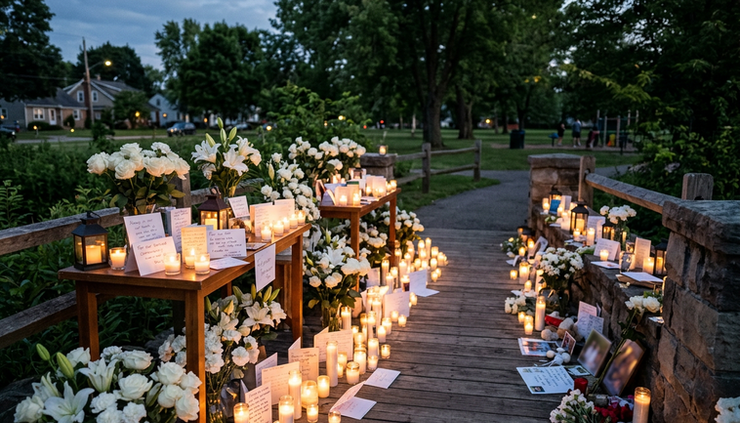
YPJF extends condolences and support to Erie
YPJF’s statement centered first on the people most directly affected: those who lost loved ones, those who were injured, survivors, witnesses, families, friends, classmates, neighbors, and responders.
The foundation was created because one community’s pain in Uvalde became a call to help others facing similar loss. That history gives YPJF’s message to Erie a particular weight. It is not a distant statement from an organization speaking in general terms. It comes from a group formed in the aftermath of a school shooting, one that understands how long the road after violence can be.
The foundation said its support may include:
Help finding referrals for families and survivors
Guidance for young people and caregivers after violence
Consideration for emergency assistance, based on resources and verification
Ongoing youth advocacy and violence-prevention support
No organization can repair the damage caused by a mass shooting. No fund, program, or public statement can restore what families have lost. But immediate support can still matter. It can help a parent make one phone call. It can connect a survivor with a local service. It can remind a grieving family that they do not have to navigate every step alone.
“Words alone are never enough,” Chapin wrote in his letter. That may be the clearest frame for what YPJF is offering Erie: not easy answers, but presence, practical help, and hope that does not deny the pain.
A letter to the people of Erie
The following message reflects Daniel Chapin’s public letter to Erie families after the tragedy.
To the people of Erie,
I wish there were something I could say that would make this easier. I wish there were words that could take away even a little of the pain families are feeling right now. But after a tragedy like this, words alone are never enough.
I know that in these first hours and days, everything can feel broken. Time can feel strange. Simple things can feel heavy. Families may be trying to answer children’s questions while still trying to understand their own grief. Some may be sitting in hospital rooms. Some may be waiting for updates. Some may be facing a silence in their homes that no one should ever have to face.
Please know this: you are not alone.
I do not say that as a phrase people use because they do not know what else to say. I say it because communities like Erie need to hear it early and often. In Uvalde, we learned that grief does not move in a straight line. We learned that people need different things at different times. Some need quiet. Some need action. Some need meals, rides, childcare, paperwork help, or someone to sit beside them without trying to explain the unexplainable.
There is no correct way to grieve something like this. There is no schedule your heart must follow. There is no deadline by which your family, your children, or your community must feel “better.”
Right now, the most important thing is to take the next safe step.
If you are a parent or caregiver, you do not need to have perfect answers. Children often need honesty that matches their age, calm reassurance, and steady routines where possible. They need to know they are loved. They need to know the adults around them are trying to keep them safe. If they ask the same question again and again, that does not mean you failed to answer. It may mean they are trying to make sense of something that makes no sense.
If you are a survivor, please do not measure your healing against anyone else’s. Shock, anger, numbness, guilt, fear, and confusion can all show up. Sometimes they come and go. Sometimes they arrive later. Getting help is not weakness. It is one of the ways people survive what should never have happened.
If you have lost someone, I am so deeply sorry. No public statement can carry the weight of that loss. No organization can tell you how to mourn. We can only stand with you, honor the lives taken, and work so that families are not left to carry the aftermath by themselves.
To the people surrounding these families, I ask you to be patient and practical. Do not ask grieving people to tell you what they need if you already see a need you can safely meet. Bring a meal. Offer a ride. Help with errands. Keep showing up after the cameras leave and after the first week passes. Many people appear surrounded at first and then painfully alone later.
To Erie’s young people, this should not be your burden to carry. You deserve schools, streets, homes, and gathering places where you feel safe. You deserve adults who listen. You deserve support without having to prove how much you are hurting. Your fear, your questions, and your anger matter.
To community leaders, faith leaders, educators, advocates, responders, and neighbors: your steadiness matters. Families will remember who protected their dignity. They will remember who helped without turning their pain into a public performance. They will remember who stayed.
The Youth Peace & Justice Foundation is here to help where we can. We cannot promise that every need can be met. We can promise that we will treat families with care, listen with respect, and work to connect those affected with support and referrals when possible.
Erie, I am sorry this happened to you. I am sorry for every family whose life changed in a moment. I am sorry for every child who now has to ask questions no child should have to ask.
But I also believe this: the people of Erie are more than what happened on October 9. Your loved ones are more than the way they died or were injured. Your community is more than this act of violence. The days ahead will be painful, but there can still be care inside that pain. There can still be courage. There can still be hope.
With grief, with respect, and with love,
Daniel “Bodhi” Chapin
Founder and President
Youth Peace & Justice Foundation
The Uvalde Foundation for Kids

What affected families may need in the first days
After mass violence, families often face a flood of immediate needs. Some are emotional. Some are practical. Many arrive at the same time.
The first days can include medical updates, funeral planning, trauma responses, school questions, transportation needs, media attention, and pressure to make decisions while exhausted. For families with children, the work becomes even harder. Adults may be grieving while also trying to create a sense of safety for young people.
Support during this period should be simple, clear, and respectful.
Helpful support may look like:
One trusted point of contact
Families should not have to repeat painful details to every person who wants to help. A trusted relative, friend, advocate, or support organization can help collect information and share updates when the family chooses.
Concrete offers
“I can bring dinner tonight,” is often easier to answer than, “Let me know if you need anything.” Specific help reduces the burden on people in shock.
Privacy protection
Families deserve control over names, stories, photos, and personal details. Grief should not become public property.
Support for children
Young people may need age-appropriate explanations, routine, calm adults, and access to trained help. Some children talk right away. Others show distress through sleep changes, behavior changes, silence, or fear of separation.
Room for delayed grief
Some people appear composed at first because their minds are focused on survival and logistics. Pain may surface days, weeks, or months later. Ongoing support matters.
This information is not medical or mental health advice. Families and survivors who need urgent care should contact qualified local professionals, emergency services, or crisis support in their area.
How neighbors and communities can help without causing more harm
A grieving community needs compassion, but compassion must be careful. People often want to help quickly, especially after a public tragedy. That impulse can do good when it is guided by humility and restraint.
The most useful help usually answers one question: Does this reduce the burden on affected families?
If the answer is yes, it may be worth doing. If the answer is no, pause.
Avoid asking survivors or grieving relatives to satisfy public curiosity. Avoid sharing unverified details. Avoid posting images or names before families and authorities have confirmed what should be shared. Avoid turning someone else’s loss into content.
Better forms of support are often quiet:
Drop off groceries through a family-approved contact.
Offer transportation to appointments or services.
Help with pets, laundry, childcare, or household tasks.
Give gift cards if a family says that would help.
Attend vigils respectfully, without crowding families.
Keep checking in after public attention fades.
Communities also need to care for those who respond to tragedy. First responders, medical workers, educators, counselors, clergy, youth workers, and volunteers may carry what they saw and heard. They may need rest, support, and space to process their own grief.
That does not take attention away from victims and families. It helps keep the circle of care strong.
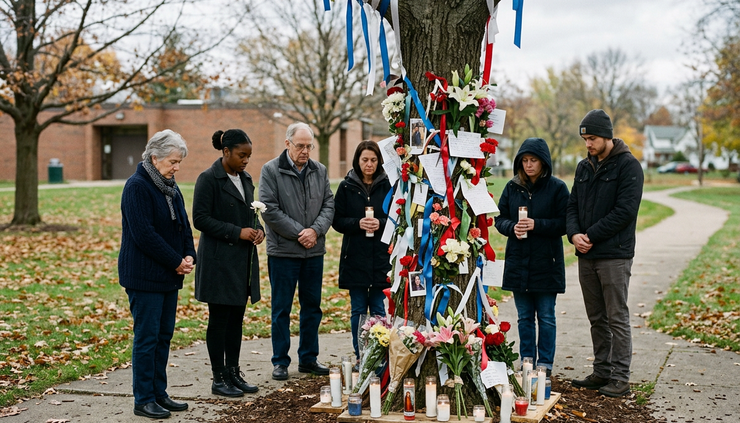
Why YPJF’s Uvalde roots matter now
YPJF’s work began after the shooting at Robb Elementary School in Uvalde. That origin shapes its response to Erie because the foundation understands that the aftermath of violence is not limited to the day of the attack.
Families may need help long after public attention moves elsewhere. Children may ask new questions as they grow. Survivors may carry trauma into school, work, relationships, and daily life. Communities may struggle with anger, division, fear, and fatigue.
A foundation born from Uvalde cannot remove Erie’s grief. But it can bring lessons learned through painful experience.
One of those lessons is that families should not be rushed. Another is that support must be practical, not only symbolic. A third is that young people need to be heard, not spoken over.
Violence-prevention work often becomes visible only after tragedy. But its deepest purpose is to protect the future. That means caring for those harmed today while working to reduce the chance that other families will face the same loss tomorrow.
The Daniel Chapins Hope Letter to Erie Families After Tragedy carries that message clearly. It does not offer easy comfort. It offers solidarity, guidance, and a promise to help where possible.
Hope does not erase grief
Hope after tragedy can sound impossible. For some families, it may even sound offensive at first. That is understandable. Hope should never be used to rush grief, silence anger, or make pain easier for others to witness.
Real hope is quieter than that.
It is the neighbor who keeps showing up. It is the advocate who helps a family find the right form. It is the teacher who notices a child is not okay. It is the friend who remembers an anniversary. It is the community that refuses to let victims be reduced to headlines.
For Erie, the days ahead will be heavy. There will be questions, grief, and needs that change over time. There may also be moments of care that help families get through the next hour, then the next day, then the next week.
YPJF’s message does not pretend that words are enough. It begins by admitting they are not. That honesty is part of what makes the letter matter.

A final word for Erie
Erie families affected by the October 9 shooting deserve compassion that lasts longer than the news cycle. They deserve privacy, practical help, and support that respects the depth of what they are carrying.
Daniel Chapin’s letter offers a simple but necessary promise: Erie is not alone.
The work now is to make that promise real. Not only through statements, but through meals, rides, referrals, listening, patience, advocacy, and steady care in the weeks and months ahead. Grief will not move quickly. Support should not disappear quickly either.


